Kimchi - Fermented Cabbage - 김치  
Print Friendly
 

Kim-chi
Fermented Cabbage
김치


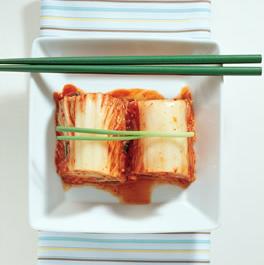
Kimchi is a traditional Korean dish consisting of fermented chili peppers and vegetables, usually based on cabbage. It is suspected that the name kimchi originated from shimchae (salting of vegetable) which went through some phonetic changes: shimchae > dimchae > kimchae > kimchi.

Common ingredients include Chinese cabbage, radish, garlic, red pepper, spring onion, ginger, salt, and sugar. While kimchi is generally identified internationally as Chinese cabbage fermented with a mixture of red pepper, garlic, ginger, and salted fish sauce, several types of kimchi exists, including regional and seasonal variations. There are variants, including kkakdugi, based on radish and containing no cabbage.

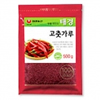
Kimchi has been cited by Health Magazine as one of the world's five "healthiest foods", with the claim that it is rich in vitamins, aids digestion, and may even prevent cancer. The health properties of kimchi are due to a variety of factors. It is usually made with cabbage, onions, and garlic, all of which have well-known health benefits. It also has active and beneficial bacterial cultures, like yogurt. Lastly, kimchi contains liberal quantities of red chili peppers (gochugaru) which has been suggested to have health benefits as well.

The best tasting kimchi is stored in room temperature for an average of six months to reach its full flavor.  It is a popular side dish but is also often used as an ingredient in cooking other popular Korean dish, including kimchi chigae (kimchi soup) and kimchi bokumbop (kimchi fried rice).

Fun fact: Like the McDonald’s University of Hamburgers in Illinois, US, there is a Kimchi Research Institute located in Pusan National University, South Korea.

Recipe Ingredients
  • Head of Napa cabbage - about one pound
  • ¼-⅓ cup red chili pepper flakes
  • 1 tbsp minced garlic
  • 1 tbsp minced ginger
  • 3-4 green onions, sliced
  • 2 tablespoons anchovy or fish sauce (optional)
  • ½ yellow onion
  • ½ ripe apple
  • ½ ripe Korean pear
  • Sea salt
  • Water
Cooking Directions
  1. Separate cabbage leaves and chop into bite-size pieces.
  2. Dissolve a quarter cup of sea salt in a bowl of warm water then pour salt water over cabbage leaves. Give cabbage a gentle toss to distribute salt water. Allow salted cabbage to sit for at least four hours.
  3. Give cabbage a good rinse to remove excess salt then transfer cabbage to a large bowl.
  4. Combine a quarter cup of fine red chili pepper flakes with warm water, stir gently with a spoon to create a red chili paste, then transfer chili paste to cabbage.
  5. Add minced garlic, minced ginger, green onions, and fish sauce.
  6. Blend yellow onion, apple, and pear with one cup of water, then add this natural sweetener to the cabbage.
  7. Put on a pair of plastic gloves and give everything a thorough toss and rubdown. You want to evenly distribute all ingredients, especially the red chili paste.
  8. Transfer seasoned cabbage leaves into a large glass bottle. Be sure to use firm pressure with your hands to push down on cabbage leaves as they stack up inside the bottle.
  9. Transfer any liquid that accumulated during the mixing process into the bottle as well - this liquid will become kimchi brine. Some liquid will also come out of the cabbage leaves as you press down on them as they are stacked in the bottle.
  10. Be sure to leave about 2 inches of room at the top of the bottle before capping it tightly with a lid. Allow bottle of kimchi to sit at room temperature for at least 24 hours.
  11. Refrigerate and take out portions as needed. The refrigerated kimchi will continue to ferment slowly in the refrigerator over time. So long as you use clean utensils to take out small portions, it will keep for up to a month in your refrigerator.
Featured Items: Click & Shop


Share & Enjoy
 

Introducing New York Kimchi
Buy delicious & authentic Korean kimchi online. Brought to you by NY's Kum Gang San restaurant.
www.newyorkkimchi.com


You May Also Like
  Kimchi Bokumbop
Kimchi Fried Rice
김치볶음밥
  Kimchi Chigae
Fermented Cabbage Soup
김치찌개
  Kkakdugi
Diced Radish Kimchi
깍두기
  Oisobagi
Stuffed Cucumber Kimchi
오이소박이


Sponsored Ad


Meat & Poultry
Bossam
Buldak
Bulgogi
Chadol Baki
Daeji Bulgogi
Daeji Galbi
Dak Galbi
Donkatsu
Galbi
Jokbal
Samgyupsal
Tangsuyuk
 
Soup & Stew
Al Chigae
Bookuhguk
Budae Chigae
Dakdoritang
Dwenjang Chigae
Galbitang
Gamjatang
Gomtang
Haemultang
Jogaetang
Kimchi Chigae
Koatgaetang
Maeuntang
Mandooguk
Miyeokguk
Samgyetang
Sollongtang
Soondaeguk
Soondooboo Chigae
Tukguk
Yookgaejang
 
Rice
Bibimbop
Gimbop
Hweh Dupbop
Kimchi Bokumbop
Omurice
Saewoo Bokumbop
Yakbop
Yubu Chobop
 
Noodle
Bibim Naeng Myun
Chajang Myun
Champong
Jangban Guksu
Japchae
Naeng Myun
Shin Ramyun
Udon
 
Seafood
Hweh
Jang Uh Gui
Nakji Bokum
Ojinguh Bokum
 
Appetizer
Dooboo Kimchi
Jaeyook Bokum
Jeepo
Mandoo
Ojinguh
Pajeon
Soondae
Soondae Bokum
Tukbokki
 
Staple
Chojang
Dashida
Dwenjang
Gochugaru
Gochujang
Kkakdugi
Kimchi
Oisobagi
Ssam
Ssamjang
 
Snack
Choco Pie
Pepero
Saewookkang
Yangparing
 
Alcohol
Makkoli
Mekju
Podoju
Soju